Humans share 98% of their DNA with chimpanzees. That remaining 2% gave us language, music, the ability to imagine futures that don't exist yet... and the remarkable tendency to be completely wrong about ourselves. We build tools for that 2%.
Your prefrontal cortex is a time machine. It can project you into a future that doesn't exist yet, hold it as a destination, and reverse-engineer a path from here to there. No other species on Earth can do that... and the ones who learn to use it deliberately change everything, starting with themselves.
Most of us walk through life with an incomplete picture of ourselves... We overestimate what we know. We misread what we feel. We hear music in our heads that never quite matches what comes out of our mouths.
These aren't character flaws. They're features of a brain built for survival, not self-accuracy. The Dunning-Kruger effect, emotional dysregulation, poor pitch discrimination — these are not signs of weakness. They are starting points.
98%Chimp builds tools grounded in peer-reviewed neuroscience that close the gap between who you think you are and who you actually are. Not with judgment. With curiosity, data, and the occasional humbling dose of reality.
Because adapting, evolving, and thriving starts with seeing yourself clearly.
Every tool we build begins with a mirror... helping you see the gap between perception and reality, so adaptation becomes possible.
Awareness without action is just anxiety. Our tools translate neuroscience into daily habits, feedback loops, and measurable change.
The goal isn't optimization. It's a fuller, more accurate, more human experience of being alive in this particular brain.
Stories that build confidence while they lull to sleep. Positive affirmations dissolved into bedtime narratives, played over soft melodies... designed to be started and forgotten. Neuroscience has never sounded this much like a lullaby.
Rate your confidence before answering each question, then discover the gap between what you thought you knew and what you actually know. Part game, part mirror... entirely humbling. Science has never been this fun to be wrong about.
The first app combining SAM emotion science with right-hemisphere focused audio interventions. Track your emotional state, then receive personalized therapeutic guidance designed to meet you exactly where you are... delivered with the warmth of a human voice.
The brain learns fastest when multiple senses reinforce each other. Unison teaches you to sing on pitch through real-time visual feedback, creating a visual-auditory loop that builds accurate pitch and muscle memory far more effectively than ear training alone.
The idea that wouldn't leave. During his final years at McGill, Shahin became preoccupied with a question: what if parents and clinicians had longitudinal neurodevelopmental data instead of annual snapshots? The question was too specific to hand off... so he learned to code. Meelo is an iPad-based assessment platform using cross-modal tasks, theory of mind measures, and executive function activities — game-like interactions children enjoy that reveal developmental trajectories over time.
"The first step toward change is awareness. The second step is acceptance."
Nathaniel Branden

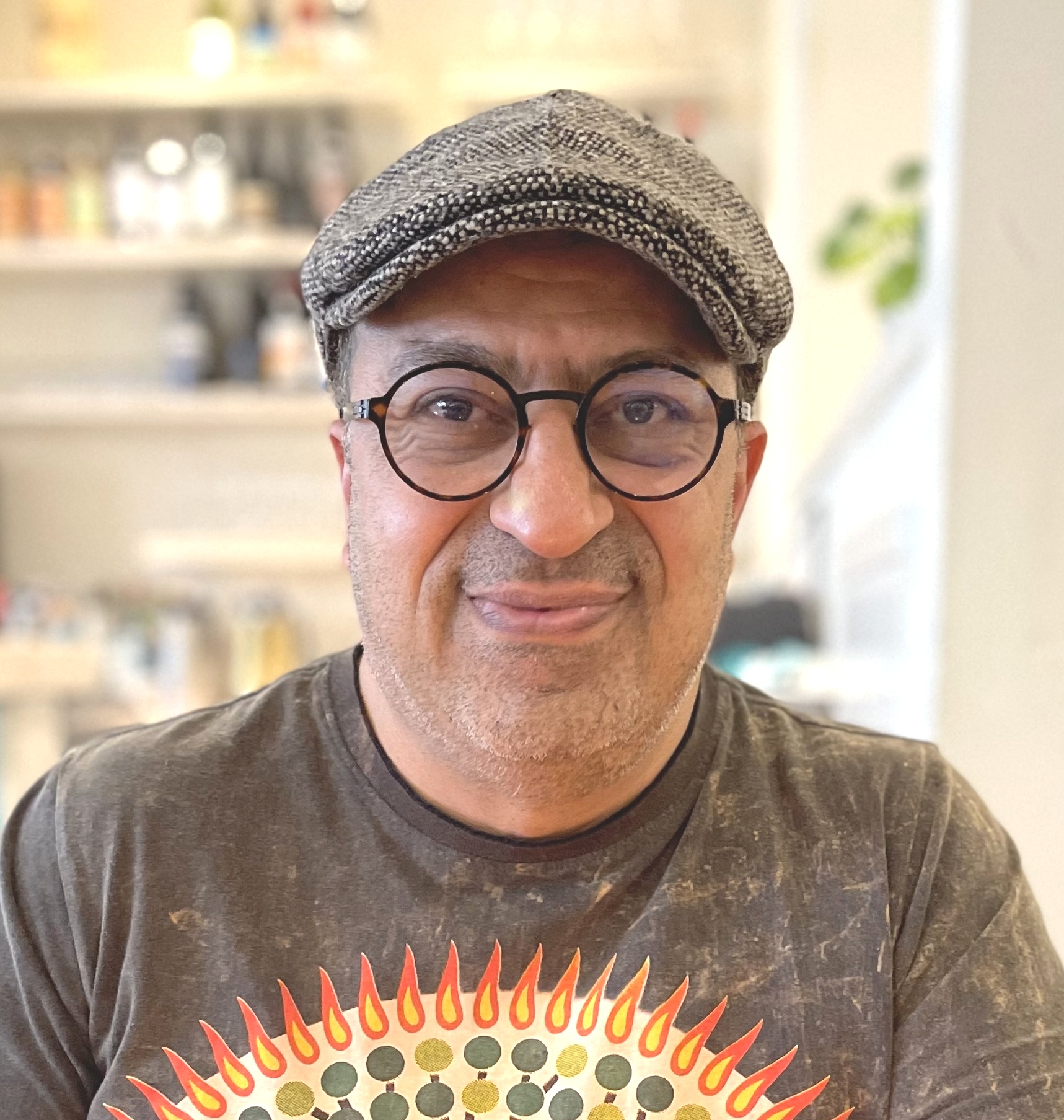
Neuroscience PhD · Principal Mobile Engineer
McGill University · Founder of DK Derby, BrainFit & Unison
Two careers that looked separate for a long time... and turned out to be the same career all along.
I spent years studying the brain at McGill, then years building software at scale. To outside observers those looked like different lives. They weren't. Both fields are fundamentally about information systems, feedback loops, and emergent behavior. One studies the most complex system we know of. The other builds systems. I saw that from the beginning... it just took the world a little longer to catch up.
What made the science unusual was its vertical range. Early work used molecular markers of gene expression... proteins and mRNAs... to map the functional architecture of the brain at cellular resolution. Later work scaled up to the systems level, using behaviour and neuroimaging (PET and fMRI) to ask the same questions about how the brain integrates information across senses and species. Molecules to cognition, and everything in between.
In 2015, an idea that had been living in my mind since my final years at McGill finally pulled me toward a keyboard. I wanted to build a tool for tracking children's neurodevelopment continuously... not just at annual checkups. The idea was too specific to hand off, so I went to coding school. That project became Meelo. The detour became a career.
98%Chimp exists at that intersection. Every product draws on peer-reviewed neuroscience, designed by someone who has spent time on both sides of the research table and who believes deeply that understanding yourself is not a luxury. It's the foundation everything else rests on.
The tools are rigorous because the science demands it. They're human because anything less would miss the point entirely.
Loomi is built with my brothers Soushiant (social scientist) and Shawn (business strategist)... three dads who asked: what if technology could nurture our kids instead of distracting them?
Beyond the products, I host The Falcon & The Whale — a podcast exploring the creative and scientific dimensions of understanding ourselves.
We're building the tools. You bring the curiosity.
Choose what interests you. We'll only reach out when it matters.